


Why Temple Filler Matters More Than You Think
When people think about aging, they usually focus on the under-eyes, cheeks, or jawline. But one of the most overlooked areas is the temples.
Temple hollowing can:
- Make the face look tired or gaunt
- Create a harsh transition between the forehead and cheekbones
- Emphasize under-eye hollows
- Age the face even when everything else looks “done”
Restoring volume here can soften the entire upper face and bring back that subtle, youthful balance.
Why Do Temples Lose Volume?
Temple hollowing happens gradually due to:
- Fat pad loss
- Bone resorption
- Collagen depletion
- Genetics (some people naturally have deeper temples)
This is why even younger patients sometimes benefit from temple filler if it’s a genetic predisposition. It’s not always about aging, but facial structure and balance.
Temple hollowing can also occur after filler use to the cheeks. The projection in the cheeks can create the illusion of hollowed temples.
How Temple Filler Is Injected
Technique matters a lot with temple filler and is dependent on factors like depth of temples and skin quality of patient.
1. Cannula Technique (Most Common)
- Uses a blunt-tip cannula instead of a needle
- Entry point is usually near the hairline, lateral cheekbone or forehead. Filler is placed in a fan-like pattern, more superficially compared to the needle method.
Why I like this method:
- Lower risk of bruising
- Safer around vascular structures
- Smoother, more even distribution (sometimes)

2. Needle Technique
- Precise bolus injection directly into temple areas (avoiding major vessels and aspirating)
Why it’s used:
- More control for structured placement
- Helpful in experienced hands for specific contouring
3. Deep vs. Superficial Placement
- Deep (on bone):
Used for structure and lift - Superficial:
Used for smoothing and blending
Most treatments combine both depending on the patient.
I prefer deep injections as it lifts the underlying structures in a way that looks the most natural and often times needs little to no manipulation. Whereas superficial placement often requires massaging the filler to make sure it’s smooth and integrates well with surrounding tissue. Often times surrounding superficial veins can be temporarily distended due to manipulation in the area. The lidocaine mixed in most fillers can also cause vasodilation (widening of vessels).
Juvederm Voluma vs. RHA Redensity: What’s the Difference?
These two fillers can both be used in the temples but they serve slightly different purposes.
Juvederm Voluma
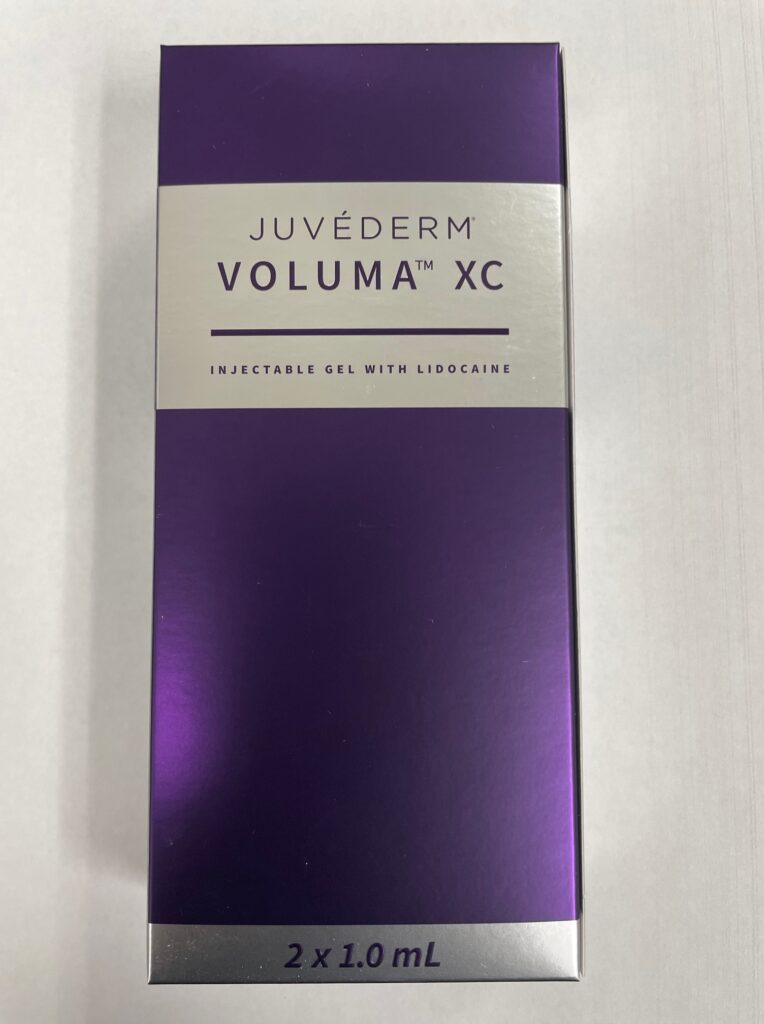
Best for: Structure, lift, and long-lasting volume
Voluma is a thicker, more robust hyaluronic acid filler designed to restore deep volume.
Why choose Voluma:
- Provides strong structural support
- Ideal for moderate to severe hollowing
- Longer-lasting (often 12–24 months)
- Helps lift and support surrounding areas (like cheeks indirectly)
Considerations:
- Less flexible than RHA fillers
- If overdone, can look too dense in thinner faces
RHA Redensity
Best for: Subtle refinement and natural movement
Redensity is a softer, more dynamic filler designed to move with your facial expressions
Why choose Redensity:
- More natural, soft finish.
- Great for subtle hollowing
- Blends beautifully (truly the best!) with surrounding tissue
- Ideal for those who want to ensure a natural finish
Considerations:
- Not as structurally supportive as Voluma
- May require more frequent maintenance
- Not ideal for significant volume loss on its own
So… Which One Should You Choose?
It really depends on your starting point and goals.
Choose Voluma if:
- You have deeper temple hollowing
- You want longer-lasting results
- You need structure and lift
Choose RHA Redensity if:
- Your hollowing is mild to moderate
- You want something soft and subtle
- You’re focused on natural movement and blending
Can They Be Used Together?
Absolutely!
Some providers will:
- Use Voluma deep for structure
- Then layer redensity superficially for smoothing
This combination can create a result that looks both lifted and natural.
What to Expect After Temple Filler
- Mild swelling or tenderness for a few days
- Possible bruising (less common with cannula)
- Results are visible immediately but settle over 1-2 weeks
Final Thoughts
Temple filler isn’t one of those treatments that screams “I got filler!” But it does quietly make everything look better and youthful.
When done well, it can:
- Soften your overall appearance
- Enhance results of other treatments
- Balance your facial structure (lift lateral brows and cheeks)
Next time you’re looking for a refresh, ask your trusted injector if you could benefit from temple filler injection.









You must be logged in to post a comment.