

Quick Facts
Glutathione is naturally produced by the body
Made from glutamate, cysteine and glycine
It’s primary role is antioxidant defense
It protects the liver, immune system, mitochondria and skin health
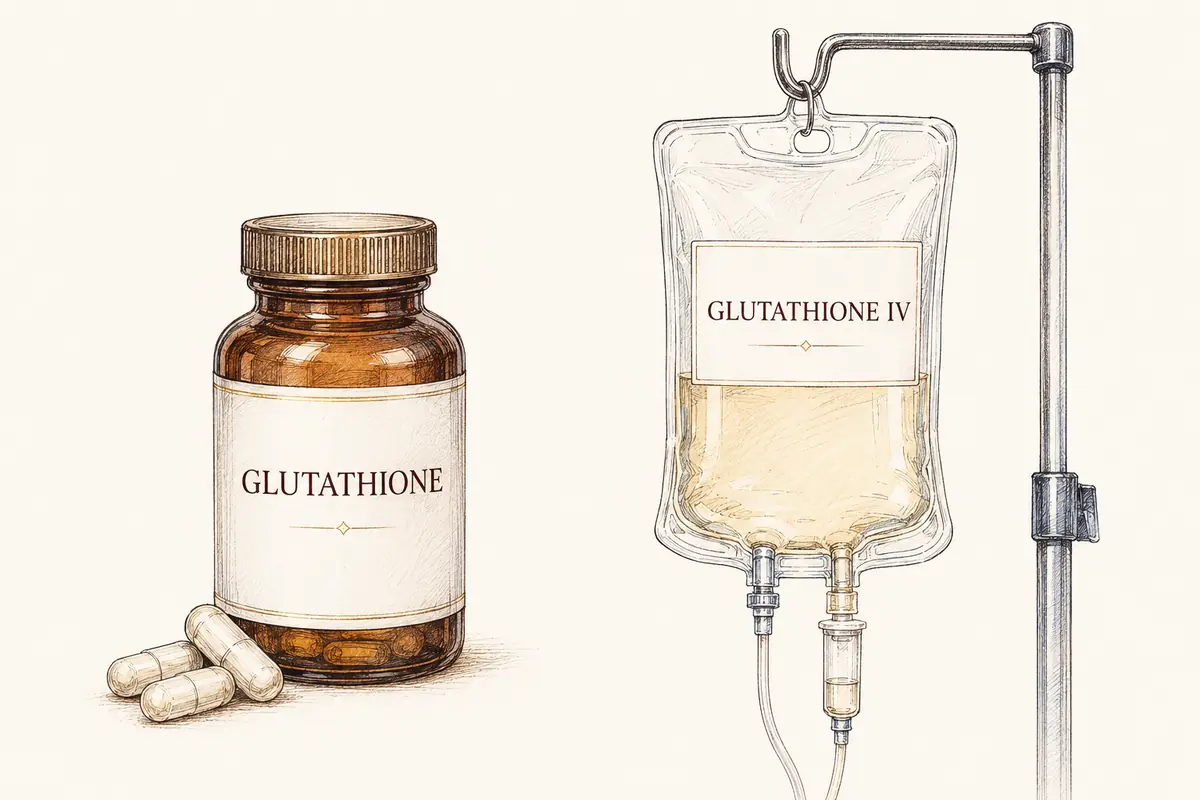
It’s available in oral, liposomal, IV and compounded injectables
Glutathione is not FDA approved as a drug or for treatment of any conditions
How Your Body Naturally Makes Glutathione
One of the things that makes glutathione unique is that your body doesn’t rely entirely on food or supplements to obtain it. Instead, it manufactures glutathione on its own using three amino acids: glutamate, cysteine, and glycine. These building blocks are assembled inside your cells through a series of enzyme-driven reactions, with the liver serving as one of the body’s primary sites of glutathione production.
Of the three amino acids, cysteine is often considered the rate-limiting ingredient. In other words, if your body doesn’t have enough cysteine available, it may struggle to produce optimal amounts of glutathione even if glutamate and glycine are readily available.
Once produced, glutathione is distributed throughout the body and stored in especially high concentrations in the liver, where it helps support the body’s natural detoxification processes. It is also found in the lungs, kidneys, brain, and immune cells, where it protects tissues from oxidative stress generated during normal metabolism.
Although our bodies are designed to continuously produce glutathione, levels don’t always remain constant throughout life.
Aging is one of the most well-documented factors associated with declining glutathione levels. Researchers have also observed lower glutathione levels in people experiencing chronic psychological stress, poor sleep, excessive alcohol intake, smoking, certain chronic diseases, and diets lacking key nutrients. Intense exercise can temporarily lower glutathione as well, although regular physical activity appears to strengthen the body’s antioxidant defenses over time.
The good news is that healthy lifestyle habits can help support your body’s natural ability to produce and recycle glutathione.
Foods That May Support Healthy Glutathione Levels
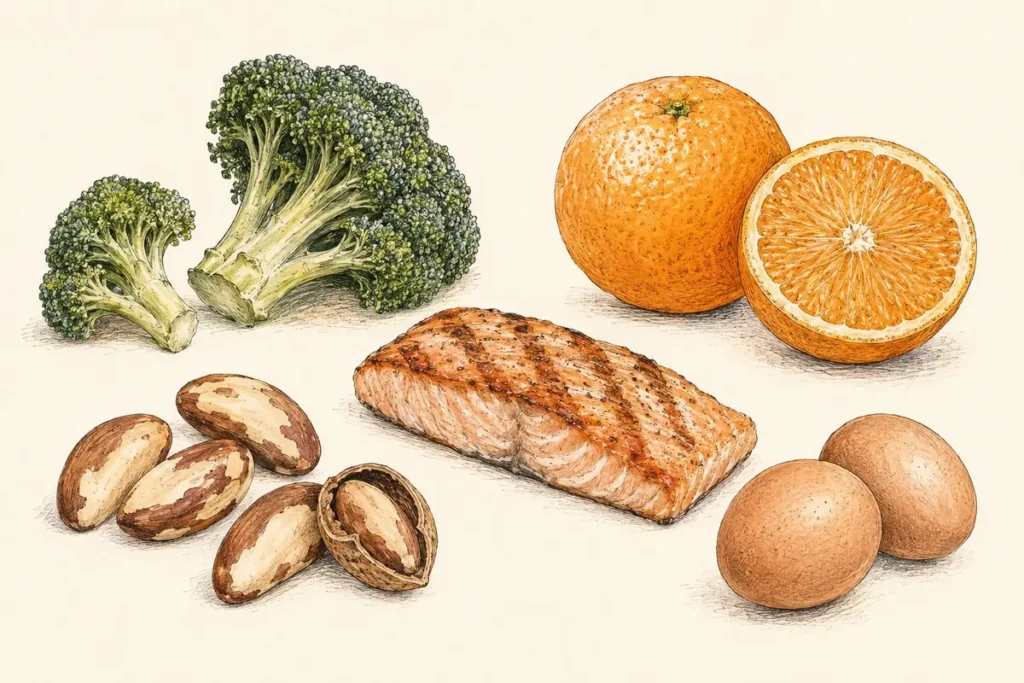
While some foods naturally contain small amounts of glutathione, the compound is easily broken down during digestion. For most people, the better strategy is to eat foods that provide the nutrients your body needs to make its own glutathione.
Sulfur-Rich Vegetables
Sulfur is essential for glutathione production because cysteine contains sulfur.
Some excellent choices include:
- Broccoli
- Brussels sprouts
- Cauliflower
- Cabbage
- Kale
- Garlic
- Onions
These vegetables also contain naturally occurring plant compounds that may stimulate enzymes involved in the body’s antioxidant defense system.
High-Quality Protein Sources
Since glutathione is built from amino acids, eating adequate protein provides your body with the raw materials it needs.
Good sources include:
- Chicken
- Turkey
- Eggs
- Fish
- Greek yogurt
- Cottage cheese
- Beans
- Lentils
- Tofu
- Tempeh
If your overall protein intake is consistently low, glutathione production may become more challenging.
Selenium-Rich Foods
Selenium is a trace mineral that helps power glutathione peroxidase, one of the body’s most important antioxidant enzymes. Rather than increasing glutathione directly, selenium helps glutathione carry out its protective functions more efficiently.
Foods rich in selenium include:
- Brazil nuts
- Tuna
- Sardines
- Shrimp
- Eggs
- Brown rice
Just one or two Brazil nuts can provide an entire day’s recommended selenium intake, so moderation is important.
Vitamin C-Rich Foods
Vitamin C works alongside glutathione by helping regenerate its active form after it has neutralized free radicals.
Some great sources include:
- Oranges
- Strawberries
- Kiwi
- Bell peppers
- Broccoli
- Guava
Instead of acting independently, vitamin C and glutathione function as part of a larger antioxidant network that helps protect cells from oxidative damage.
Nutrients That Help Glutathione Do Its Job
Glutathione rarely works alone. Several vitamins and minerals help your body produce it, recycle it, or maximize its effectiveness.
Selenium
As mentioned above, selenium is required for glutathione peroxidase, an enzyme that uses glutathione to neutralize harmful compounds.
Riboflavin (Vitamin B2)
Riboflavin helps convert oxidized glutathione back into its active, reusable form. Without enough vitamin B2, your body’s glutathione recycling system becomes less efficient.
Vitamin C
Vitamin C helps regenerate glutathione after it has been used and also provides antioxidant protection of its own.
Vitamin E
Vitamin E primarily protects cell membranes from oxidative damage. Glutathione helps recycle vitamin E after it has been used, creating another example of how antioxidants work together rather than individually.
N-Acetylcysteine (NAC)
NAC has become a popular supplement because it supplies cysteine, the amino acid most likely to limit glutathione production. Rather than providing glutathione directly, NAC gives the body one of the key ingredients needed to make more of it.
Alpha-Lipoic Acid
Research suggests alpha-lipoic acid may help regenerate glutathione and support the body’s overall antioxidant system, although more research is needed to determine which populations benefit the most from supplementation.
Oral vs. Liposomal vs. IV Glutathione
As glutathione has grown in popularity, so have the number of ways to take it. Capsules, liposomal supplements, and IV infusions all aim to increase glutathione levels, but they don’t behave exactly the same in the body.
Oral Glutathione
Traditional oral glutathione supplements were once thought to have poor absorption because digestive enzymes break down some of the molecule before it reaches the bloodstream.
More recent research suggests that oral glutathione can increase blood glutathione levels in some individuals, particularly when taken consistently over several months. However, responses vary from person to person, and absorption is generally lower than intravenous administration.
Oral supplements are often the most convenient and affordable option for long-term use.
Liposomal Glutathione
Liposomal glutathione packages the antioxidant inside microscopic fat-like spheres called liposomes.
These liposomes help protect glutathione from digestion and may improve absorption compared with traditional capsules. While early research is encouraging, studies directly comparing liposomal and conventional oral glutathione remain limited.
Many people choose liposomal formulations when they want improved absorption without receiving injections.
IV Glutathione
Intravenous glutathione bypasses the digestive system entirely by delivering glutathione directly into the bloodstream.
Because it enters the circulation immediately, IV administration produces higher short-term blood levels than oral supplementation. This is one reason IV glutathione is commonly offered at wellness clinics and medical spas.
However, higher blood levels do not automatically translate into better long-term health outcomes. Researchers are still studying which medical conditions may benefit from IV glutathione and whether it offers meaningful advantages over oral supplementation for healthy individuals.
Is IV Glutathione FDA Approved?
This is an area where there is often confusion.
In the United States, there are currently no FDA-approved injectable glutathione products for cosmetic skin lightening or general wellness purposes. Many IV glutathione treatments offered by wellness clinics are prepared by compounding pharmacies, which operate under a different regulatory framework than FDA-approved drug manufacturers.
That doesn’t necessarily mean compounded glutathione is unsafe, but it does mean these products have not undergone the same FDA review process for safety, effectiveness, and manufacturing consistency as approved prescription medications.
If you’re considering IV glutathione, it’s worth asking your provider where the medication is sourced, whether it’s compounded, and why they believe it’s appropriate for your individual health goals.
How Long Does It Take for Glutathione to Work?

The timeline for noticeable results depends on several factors, including the reason you’re taking glutathione, the method of administration, your baseline glutathione levels, and your overall health. While some people notice subtle changes within days, others may require several weeks of consistent use before experiencing any benefits.
Within the First Few Days
People receiving IV glutathione sometimes report feeling refreshed or more energized shortly after an infusion. However, scientific evidence supporting immediate improvements in energy among healthy individuals is limited, and these effects may also be influenced by other ingredients commonly included in wellness IVs, such as vitamin C or B vitamins.
For oral supplements, noticeable changes are less likely to occur within the first few days because glutathione levels increase gradually with consistent supplementation.
After 2 to 4 Weeks
If glutathione supplementation is beneficial for an individual, this is often when subtle improvements may begin to appear.
Some people report:
- Feeling less fatigued
- Recovering more comfortably after exercise
- A greater sense of overall well-being
It’s important to note that these experiences are subjective and have not been consistently demonstrated across all clinical studies.
After 8 to 12 Weeks
Most clinical studies evaluating glutathione for skin brightening have followed participants for approximately 8 to 12 weeks.
When improvements occur, they tend to be gradual rather than dramatic. Current evidence suggests any brightening effects are generally modest, vary from person to person, and often require continued treatment to maintain. Factors such as genetics, sun exposure, hormones, and inflammation continue to play a much larger role in determining skin tone than glutathione alone.
Long-Term Use
Research on long-term glutathione supplementation is still evolving. While several studies suggest it is generally well tolerated when used appropriately, scientists continue to investigate which individuals are most likely to benefit, what doses are optimal, and whether oral, liposomal, or IV administration offers meaningful long-term advantages.
Like many wellness therapies, glutathione is not a quick fix. Supporting your body’s natural glutathione production through a nutrient-rich diet, regular exercise, quality sleep, and healthy lifestyle habits remains one of the most evidence-based approaches to maintaining healthy glutathione levels.
Potential Side Effects and Risks
Glutathione is generally well tolerated when used appropriately, but like any supplement or medication, it isn’t completely free of potential side effects.
Oral Glutathione
Reported side effects are usually mild and may include:
- Upset stomach
- Bloating
- Nausea
- Loose stools
- Abdominal discomfort
These symptoms often improve by taking the supplement with food or reducing the dose.
IV Glutathione
Intravenous glutathione is generally administered under medical supervision, but there are still potential risks.
Possible side effects include:
- Headache
- Nausea
- Dizziness
- Flushing
- Temporary lightheadedness
- Irritation around the IV site
Although uncommon, allergic reactions can occur with almost any medication or infusion.
The U.S. Food and Drug Administration has also expressed concerns regarding compounded injectable glutathione products because they have not undergone FDA review for safety, effectiveness, or manufacturing consistency. Choosing a qualified healthcare provider who obtains medications from reputable compounding pharmacies is an important part of minimizing risk.
Who Should Speak With a Healthcare Provider First?
Before starting glutathione supplementation, it’s a good idea to discuss it with your healthcare provider if you:
- Are pregnant or breastfeeding
- Have asthma, as rare cases of bronchospasm have been reported with inhaled glutathione
- Have chronic liver or kidney disease
- Are receiving chemotherapy or other specialized medical treatments
- Take prescription medications and are unsure about potential interactions
While glutathione plays an important role in normal human health, supplementation isn’t necessary for everyone.
Myth vs. Fact
Myth: Glutathione permanently lightens your skin.
Fact: Current research suggests that glutathione may modestly brighten skin in some individuals by influencing melanin production, but results are inconsistent and generally require continued treatment to maintain. It should not be viewed as a permanent solution for changing skin tone.
Myth: IV glutathione is always better than oral supplements.
Fact: IV glutathione produces higher short-term blood concentrations because it bypasses digestion. However, researchers are still investigating whether those higher levels lead to superior long-term health outcomes in otherwise healthy people.
Myth: Everyone should take glutathione.
Fact: Healthy individuals naturally produce glutathione every day. For many people, focusing on adequate protein intake, nutrient-rich foods, regular exercise, quality sleep, and stress management may do more to support healthy glutathione levels than supplementation alone.
Myth: More glutathione always means better health.
Fact: The body carefully regulates glutathione production. Taking increasingly large doses does not necessarily translate into greater health benefits and, in some situations, excessive supplementation may provide little additional value.
Last Take
Glutathione has earned its reputation as one of the body’s most important antioxidants for good reason. From protecting cells against oxidative stress to supporting the liver’s natural detoxification pathways and helping maintain normal immune function, this small tripeptide quietly participates in countless processes that keep the body functioning as it should.
At the same time, it’s important to separate well-established science from marketing claims.
While glutathione supplementation shows promise in several areas, including certain medical conditions and skin health, researchers are still working to determine who benefits the most, which delivery methods are most effective, and what the optimal dosing strategies should be. Current evidence does not support glutathione as a miracle treatment, nor does it justify many of the exaggerated claims often seen online.
For most people, the best place to start is by supporting the body’s own ability to produce glutathione through a balanced diet, adequate protein intake, regular physical activity, quality sleep, and healthy lifestyle habits. If you’re considering oral or intravenous glutathione, discussing your goals with a qualified healthcare provider can help determine whether supplementation makes sense for your individual needs.
Like many wellness treatments, glutathione appears to have a place in modern health care. The key is approaching it with realistic expectations and an understanding of what today’s research actually shows.
Journal of Biological Chemistry.
Redox Biology.
Molecular Aspects of Medicine.
Biomedicine & Pharmacotherapy.
Journal of Gastroenterology and Hepatology.
Free Radical Research.
Antioxidants & Redox Signaling.
Antioxidants & Redox Signaling.
Journal of Dermatological Treatment.
Dietary Supplement Label Database: Glutathione.
FDA highlights concerns with using dietary ingredient glutathione in compound sterile injectables.










You must be logged in to post a comment.