

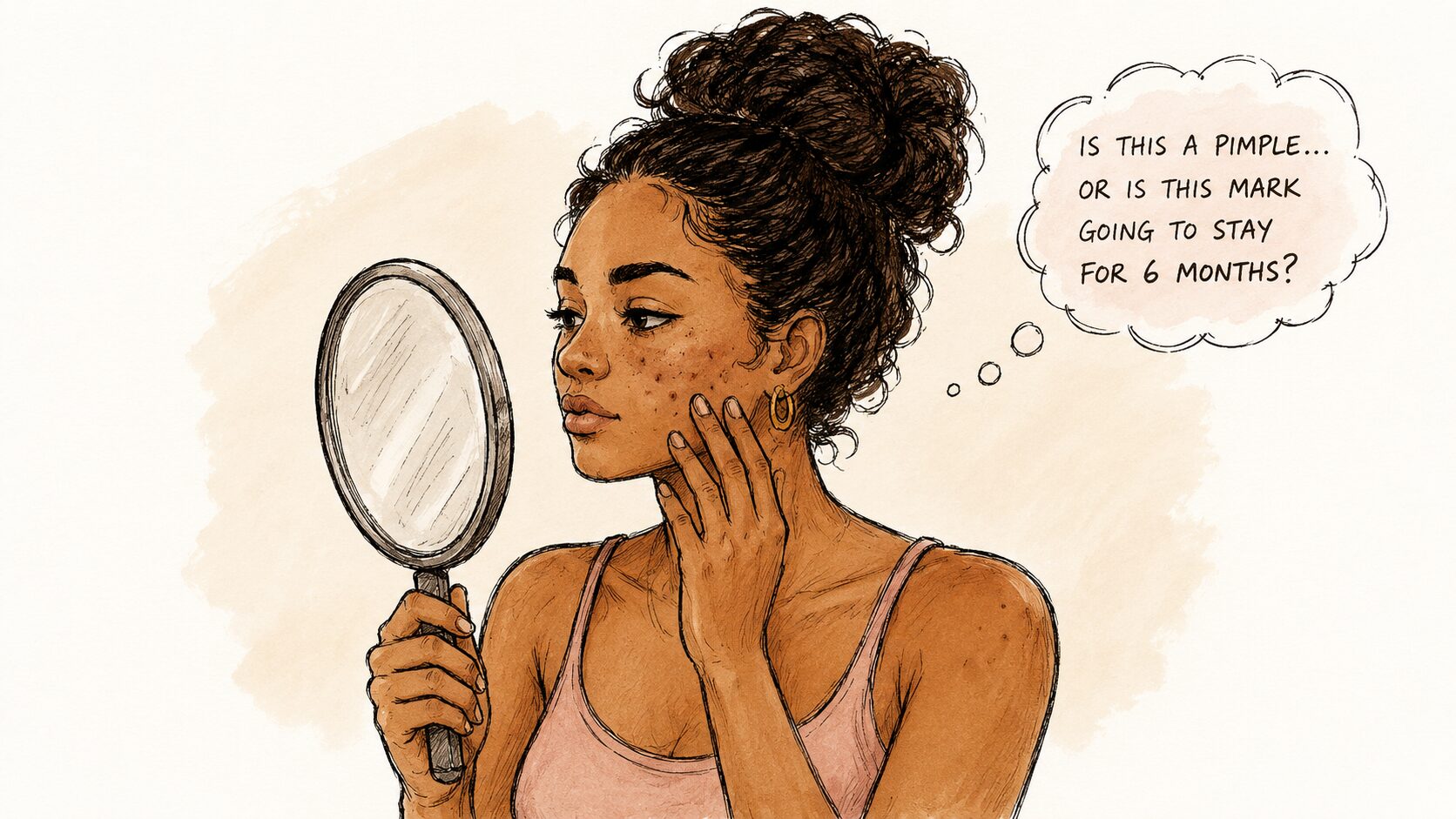
Acne scars can be frustrating for anyone, but for people with melanated skin, treating them often comes with an additional concern: post-inflammatory hyperpigmentation (PIH). While some treatments can dramatically improve acne scars, choosing the wrong treatment or the wrong provider can sometimes leave behind discoloration that lasts longer than the original breakout!
Thankfully, there’s been so many advances in the aesthetic world, where people of color have way more options than ever before! Advances in new and older acne scar treatments have revealed impressive results while still reducing the risk of adverse reactions on darker skin tones when performed appropriately.
In this guide, we’ll break down the treatments that consistently stand out in our research and experience, including Microneedling, Subcision with filler (specifically RHA redensity, and UltraClear Laser.
First: Is It Really a Scar?
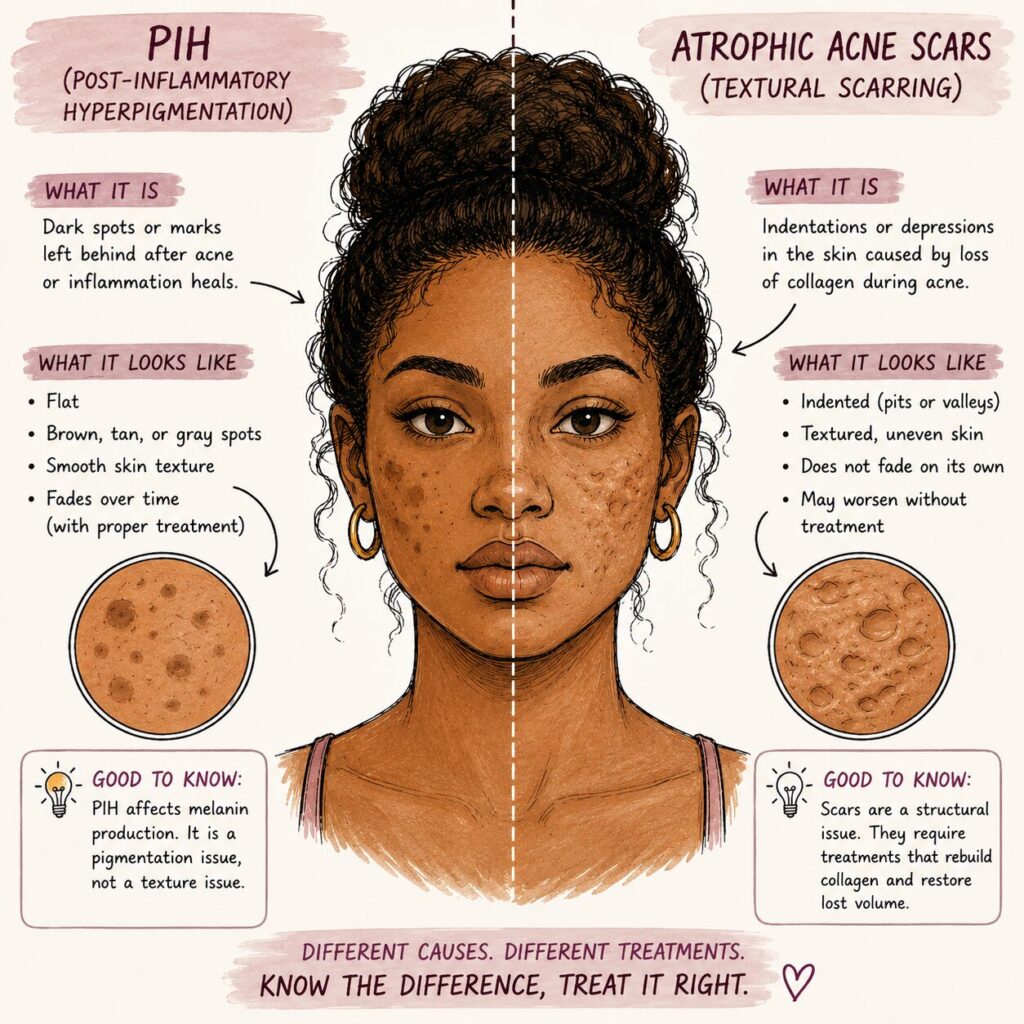
One of the biggest misconceptions in aesthetics is confusing acne scars with post-inflammatory hyperpigmentation.
Post-inflammatory hyperpigmentation (PIH) is discoloration left behind after acne heals. The skin remains smooth, but brown, gray, or purple marks linger. This can also occur from any damage to the skin: after popping a pimple, a scratch, a laser treatment with too high settings.
Acne scars involve actual changes in skin texture, including:
- Rolling scars – Gives wave-like depression to the skin
- Boxcar scars – Oval/round depression to the skin
- Ice pick scars- Tiny pitted crates to the skin
- Mixed atrophic scars- combination of all these acne scar types
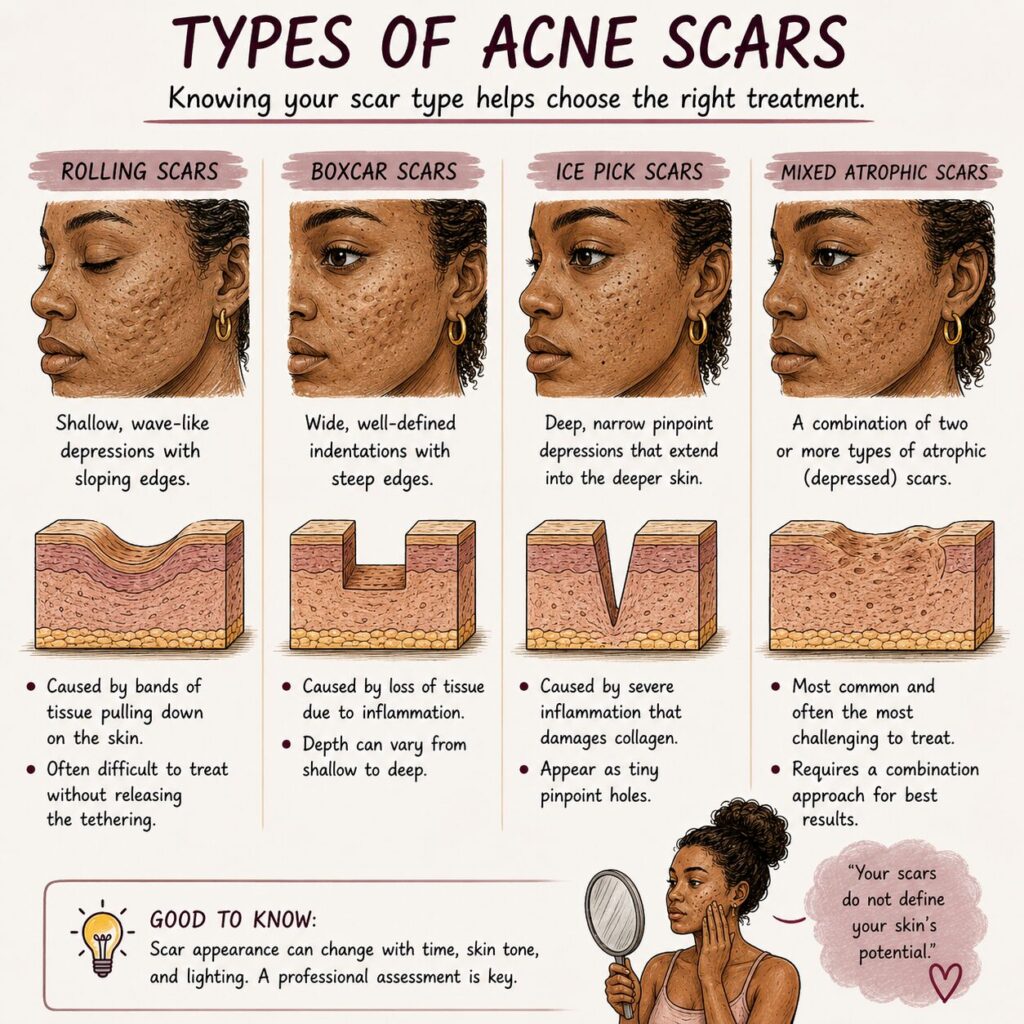
This distinction matters because pigmentation and texture can often require different treatments.
1. Microneedling: The Workhorse Treatment
Best For:
- Early acne scars
- Mild-to-moderate texture concerns
- Patients new to procedures
- All skin types
Microneedling creates thousands of controlled micro-injuries in the skin. These microscopic channels stimulate a wound-healing response, encouraging fibroblasts to produce new collagen and elastin.
For melanated skin, microneedling has become a favorite because it improves texture without delivering significant heat to the skin, reducing the risk of pigment complications compared with some energy-based devices.
Benefits
- Low risk for skin of color
- Improves texture gradually
- Can be combined with PRP, exosomes, or growth factors for quicker healing and increased results
- Minimal downtime
Drawbacks
- Requires multiple sessions
- Results develop slowly
- Deep tethered scars often need more than collagen stimulation alone
What the Research Shows
Several studies have demonstrated significant improvements in atrophic acne scars following serial microneedling treatments, particularly rolling and shallow boxcar scars.
2. Subcision + Redensity: Treating the Cause of Rolling Scars
Best For:
- Rolling scars
- Tethered scars
- Long-standing depressions
- Patients wanting visible improvement quickly
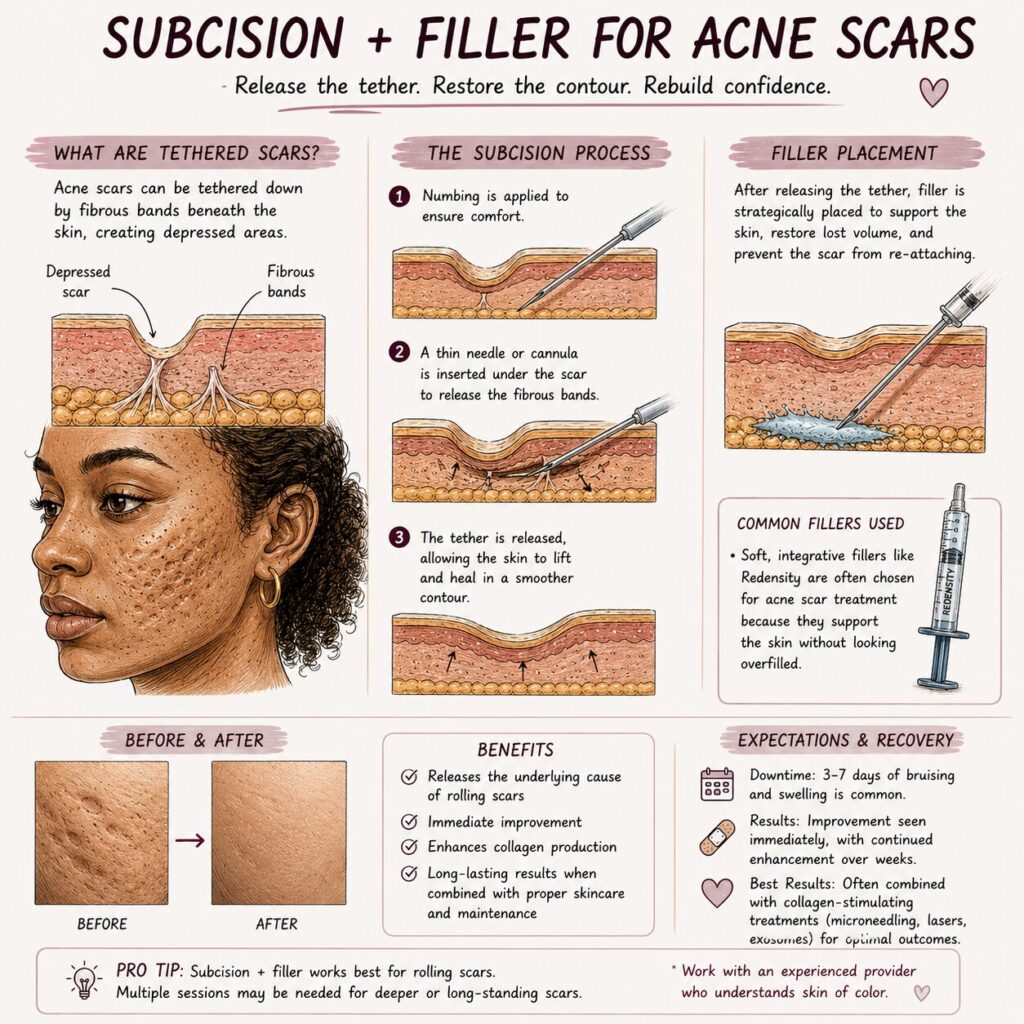
Many acne scars aren’t just missing collagen, they’re tethered to underlying tissue.
Subcision works by inserting a needle or cannula beneath the scar to release fibrous bands pulling the skin downward.
Once released, filler can help prevent the scar from re-attaching while immediately restoring volume.
Why Redensity?
Redensity is a beautifully soft hyaluronic acid filler that aids in superficial correction and tissue integration. It works great on fine lines and wrinkles because of how well it blends naturally into areas where subtle support is needed. It’s one of our favorite fillers for a seamless, natural finish!
Benefits
- Addresses scar tethering directly
- Immediate visual improvement
- Particularly effective for rolling scars
- Can be combined with collagen-stimulating treatments
Drawbacks
- Bruising is common
- Can be a senitive process
- Results can vary in general but also depend heavily on provider skill
- Filler is temporary
- Not ideal for ice-pick scars
What the Research Shows
Subcision consistently appears among the most effective interventions for rolling acne scars because it addresses the underlying mechanical problem rather than simply stimulating collagen.
3. UltraClear Laser: A Newer Option Generating Excitement
Best For:
- Mixed acne scars
- Texture concerns
- Collagen remodeling
- Patients seeking significant improvement with limited downtime
UltraClear is a fractional cold-fiber laser that has gained attention for its ability to resurface skin while minimizing thermal injury compared with many traditional ablative devices.
This distinction is particularly important for melanated skin because excessive thermal injury can increase the risk of post-treatment pigmentation changes.
Drawbacks
- More expensive than microneedling
- May still require multiple sessions
- Provider experience remains critical for skin of color
Why Skin of Color Patients Are Interested
Historically, many patients with darker skin tones were told to avoid laser treatments altogether due to concerns about burns, post-inflammatory hyperpigmentation (PIH), and unwanted pigment changes like hypopigmentation (lightening of pigment after injury). While caution is still warranted, advances in laser technology have expanded the treatment options available for melanated skin.
Today, modern laser systems, particularly fractional lasers and devices that can be customized with conservative settings, may be appropriate for skin of color when performed by an experienced provider. In general, treatments that create controlled injury while minimizing excessive thermal damage tend to be better tolerated in darker skin tones. However, safety depends not only on the device itself, but also on the provider’s experience, treatment settings, and post-procedure care.
Examples of devices commonly used in skin of color:
- Clear and brilliant/permea
- Ultra clear (some modes)
- Aerolase Neo Elite
- Non-ablative fractional lasers (such as certain 1540–1550 nm and 1927 nm platforms)
- 1064nm Nd:Yag lasers
Which Treatment Works Best?
The answer depends on the type of scar.
Rolling Scars
Winner: Subcision + Redension
Reason: These scars are often tethered and require release.
Mild Texture Changes
Winner: Microneedling
Reason: Excellent safety profile and gradual collagen stimulation.
Mixed Texture + Surface Irregularities
Winner: UltraClear
Reason: Addresses broader texture concerns and collagen remodeling simultaneously.
Many Patients Need Combination Therapy
The most impressive results often come from combining treatments.
Example:
- Subcision to release tethering
- Redensity to support the released scar
- Microneedling or UltraClear to stimulate collagen
- Maintenance skincare to improve pigmentation
What About the Dark Marks Left Behind?
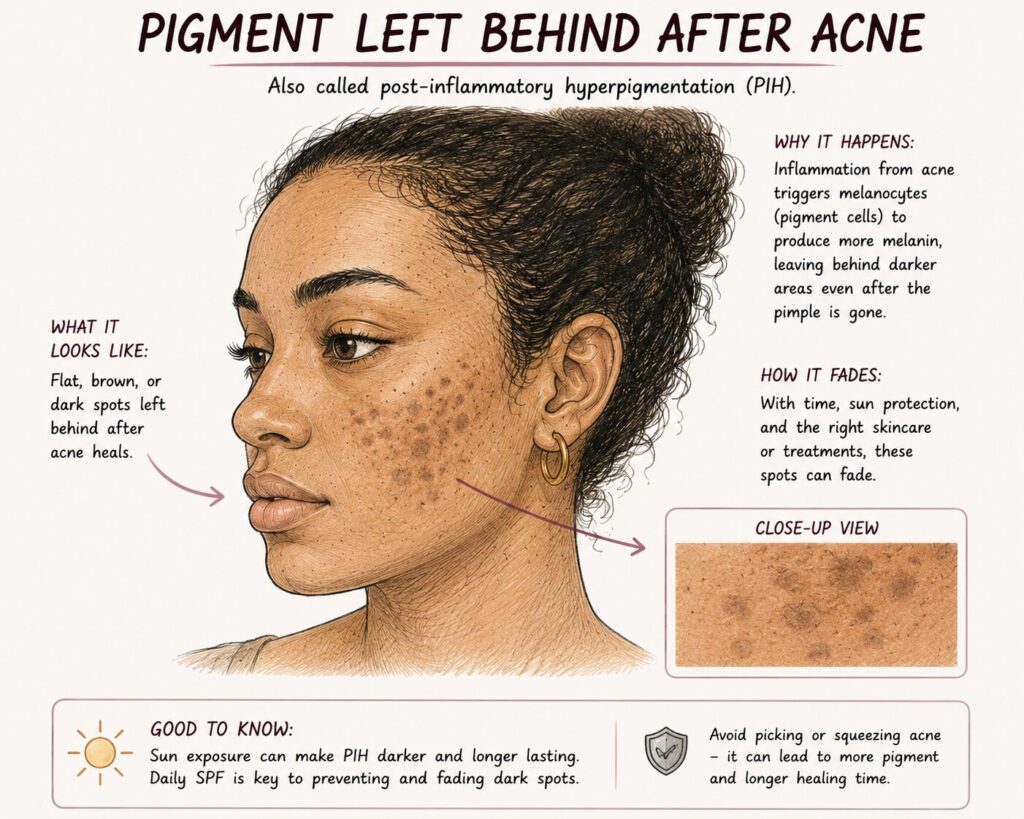
Even after texture improves, many patients remain bothered by pigmentation.
This is where skincare can become extremely valuable.
1. AnteAGE Brightening Exosomes
Exosomes are tiny extracellular vesicles released by cells. Think of them as biological “messengers” that carry:
- Growth factors
- Proteins
- Lipids
- RNA signaling molecules
These messages help cells communicate during tissue repair and wound healing. AnteAGE Exosomes are a regenerative product line that contains exosomes and growth factors derived from laboratory-cultured human bone marrow mesenchymal stem cells.
Potential benefits:
- Supports healing after procedures
- May help calm inflammation
- Often incorporated into post-treatment protocols
Research on topical exosomes is still emerging, but results are exciting!
2. Alastin A-Luminate
Contains a blend of ingredients designed to target visible discoloration and uneven tone.
Key Ingredients:
- PATH-3: A proprietary blend designed to target and improve the appearance of discoloration.
- Tranexamic Acid: Known for its ability to reduce the appearance of dark spots and even out skin tone.
- Niacinamide: Helps to brighten the skin and improve overall texture and tone.
Potential benefits:
- Supports brighter skin tone
- Useful for post-inflammatory pigmentation
- Can be paired with procedures
Rejuran
Originally developed in South Korea, Rejuran utilizes polynucleotides derived from salmon DNA.
It aids in pigmentation concerns by promoting deep cellular repair, reducing inflammation, and stimulating collagen growth
Potential benefits:
- Supports skin repair
- Improves skin quality
- May complement scar treatments
Although often discussed for anti-aging, many clinicians are exploring its role in skin recovery, pigment and texture improvement.
For melanated skin, the goal tends to be more than just improving physical acne scars.
It’s improving acne scars while protecting the surrounding skin from unnecessary inflammation and pigment changes.
If we were prioritizing treatments for many patients with rolling or mixed acne scars:
- Subcision + Redensity
- UltraClear Laser
- Microneedling maintenance sessions
The best treatment, however, is often a combination approach tailored to your scar type, skin tone, healing response, and goals.
Like most aesthetic concerns, acne scars are rarely one-size-fits-all… and neither are the solutions.
References:
https://www.webmd.com/skin-problems-and-treatments/acne/what-to-know-about-rolling-scars
https://www.healthline.com/health/boxcar-scars









You must be logged in to post a comment.